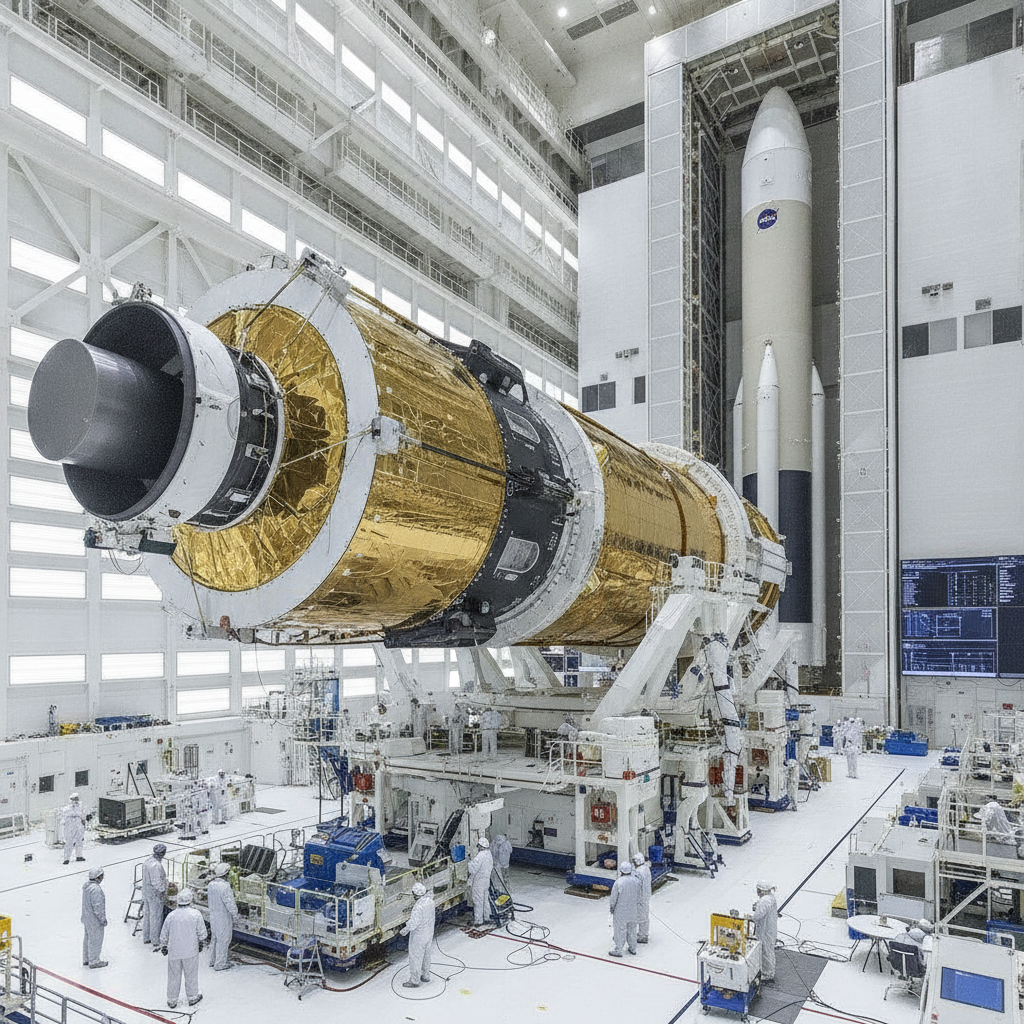
NASA plans to launch the Nancy Grace Roman Space Telescope on Aug. 30, according to LAist. The $4.3 billion instrument is named after the agency's first chief astronomer and is intended to examine the expansion of the universe along with planets that orbit other stars.
The project originated from earlier plans to build a telescope focused on Type 1A supernovas, which serve as markers for measuring the effects of dark energy. During development, the National Reconnaissance Office offered NASA an unused satellite that could be adapted for astronomical observations instead of downward surveillance.
Cosmologist Daniel Scolnic of Duke University noted that the donated satellite required major changes before it could serve as an observatory. He added that additional observations of these supernovas would help refine understanding of how the universe expands.
Project scientist Julie McEnery stated that the telescope matches the sensitivity of the Hubble Space Telescope yet can complete wide surveys far more quickly. One month of observations across the Milky Way would require roughly a century if attempted with Hubble, she said.
McEnery also emphasized that the resulting catalogs will be open to the public. She observed that a high school teacher in Kentucky and a professor at Princeton could access the data simultaneously.
Ohio State University astronomer Scott Gaudi explained that the telescope will employ gravitational microlensing to detect planets otherwise invisible to other methods. These include worlds at the center of the galaxy that resemble Jupiter, Saturn, Uranus and Neptune.
University of Chicago astronomer Wendy Freedman said new instruments of this type often produce unexpected findings. She noted that the most significant results from the five-year mission may not be foreseeable at launch.
This report is based on coverage by LAist: https://laist.com/news/nasa-is-about-to-launch-a-space-telescope-that-could-change-how-we-see-the-universe