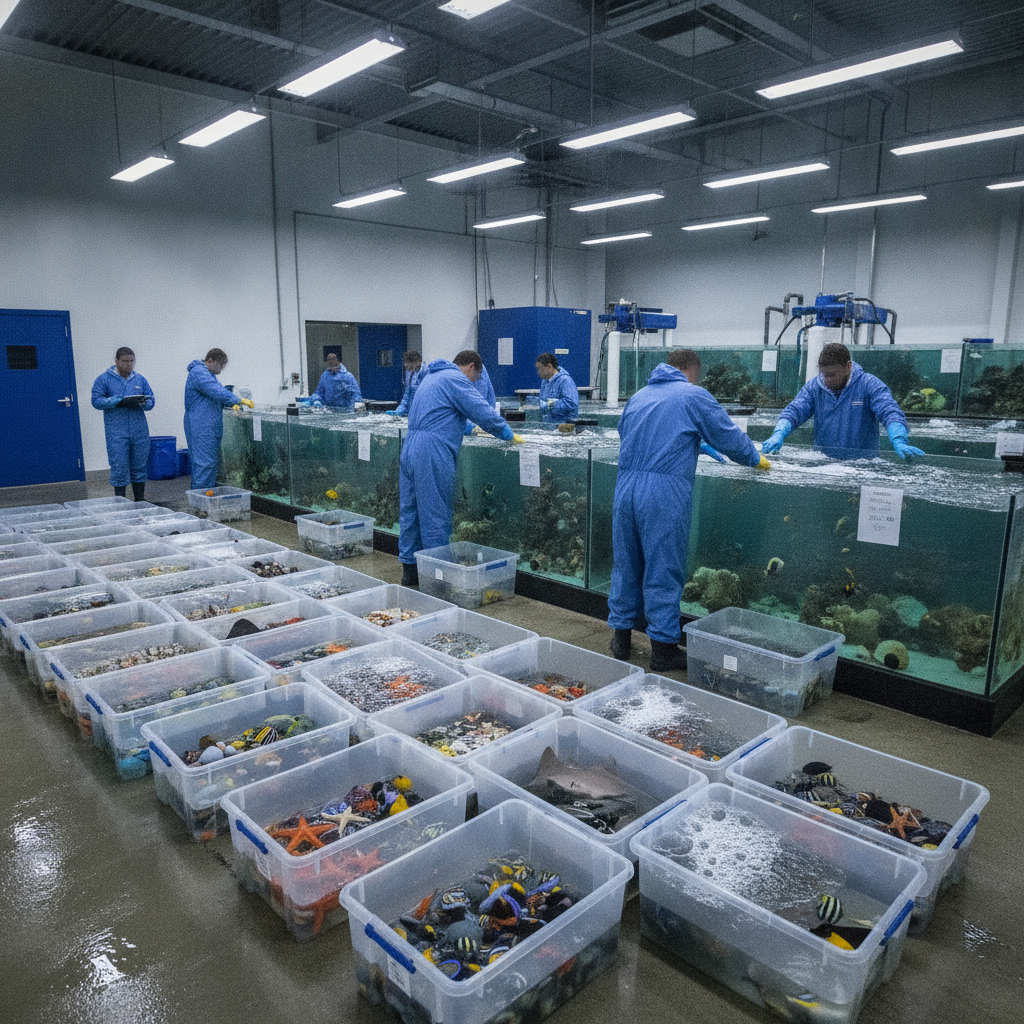
The Aquarium of the Pacific in Long Beach received close to 1,000 marine animals seized during two federal operations this summer, according to LAist. Officials intercepted box trucks carrying thousands of creatures each time and routed hundreds of the marine specimens to the facility for care and placement.
In June, aquarium staff accepted roughly 500 animals that included fish, sharks, clams, shrimp, prawns and snails. Employees worked overnight to test water chemistry and move the arrivals into quarantine tanks. About one quarter of those animals died shortly after arrival.
A second seizure near the end of July delivered an additional 300 animals after a short stay at a federal center in Torrance. The aquarium participates in the Association of Zoos and Aquariums Wildlife Confiscations Network, which coordinates placement of trafficked wildlife at accredited institutions.
Nate Jaros, vice president of animal care, described the intake process as lengthy and stressful. He noted that matching water parameters can take hours and that the animals often arrive carrying heavy parasite loads after being packed in small bags of seawater.
Among the species were brownbanded bamboo sharks listed as near threatened, endangered Banggai cardinalfish and ocellaris clownfish. Coral specimens formed a large part of the intake and required careful identification, sometimes under a microscope.
Jeff Flocken, the aquarium’s president and chief executive, said wildlife trafficking harms ecosystems and drives species toward extinction. The facility has already arranged transfers of many animals to other accredited sites and will integrate suitable specimens into its own exhibits.
This report is based on coverage by LAist: https://laist.com/news/climate-environment/aquarium-of-the-pacific-scrambled-to-save-hundreds-of-sea-creatures-after-massive-smuggling-busts