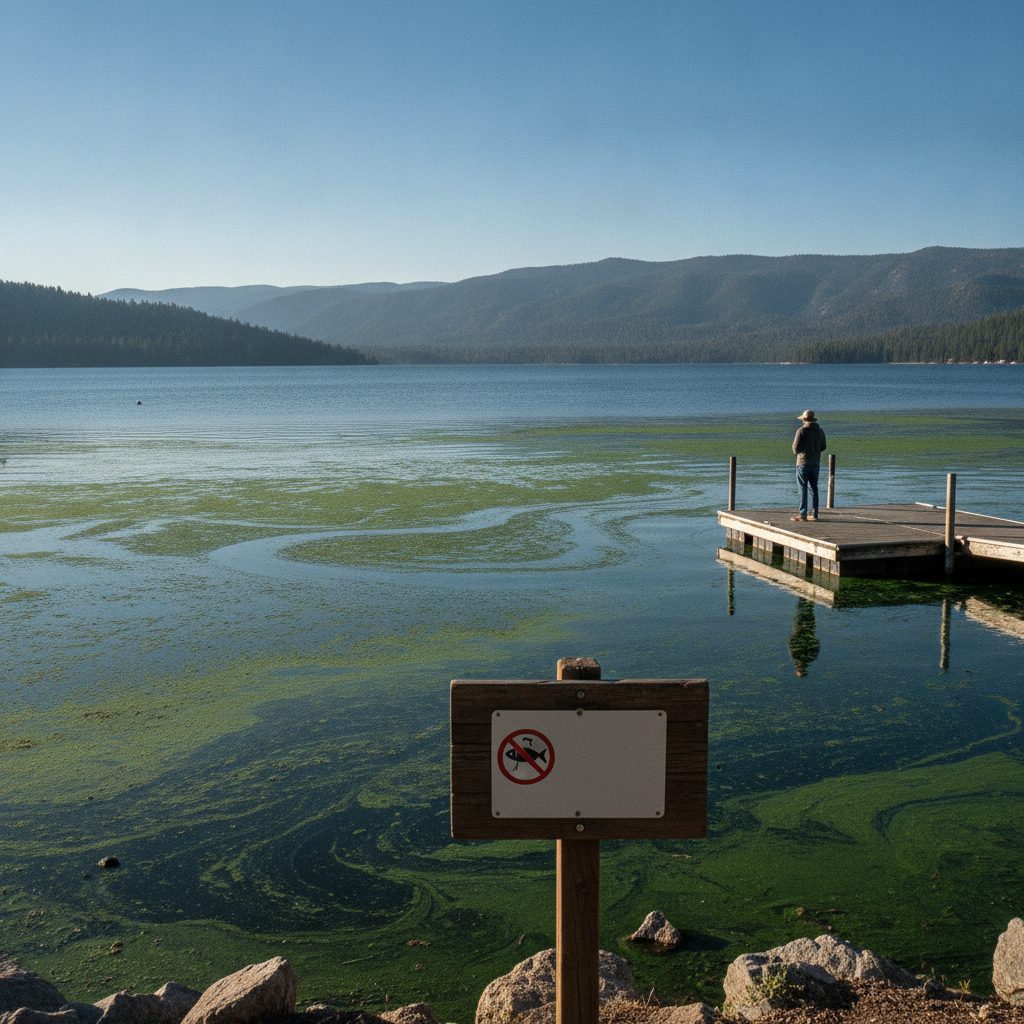
California water officials have alerted the public to harmful algal blooms present throughout Big Bear Lake. The affected water appears discolored with a green sheen, surface scum and patches of floating material. Authorities recommend keeping both people and pets away from the lake to prevent exposure.
The blooms result from tiny bacteria that multiply rapidly into large visible formations, according to Marisa Van Dyke, a senior environmental scientist at the State Water Resources Control Board. She noted that the conditions affect many California lakes and streams. "When you inadvertently swallow some of that water, it can contain those toxins," she said. "It can be quite severe and cause you to need to have some hospitalization or even visit an animal veterinarian to get treatment."
Officials urge visitors to refrain from swimming, consuming shellfish from the lake or using the water for drinking or cooking. Standard methods such as boiling or filtering do not remove the toxins. Anglers are advised to rinse fish thoroughly before handling and to consume only the fillets.
Children and dogs face higher risks because they are more likely to ingest water during play. State guidance states that pets should not enter the lake or approach shoreline scum. Van Dyke suggested monitoring conditions closely: "If [the water] looks a little bit more green … and there's a little bit more growth of something that looks kind of like a plant but not quite, there might be a harmful algal bloom occurring," she said. "So keep an eye on children and pets so that they don't get in contact with that material."
Anyone who enters the water should rinse thoroughly afterward with clean water, dry off and change into fresh clothing. Reported symptoms in people include eye irritation, skin rash, headache and vomiting, along with possible neurological effects. Immediate medical attention is recommended if symptoms appear.
Dogs may exhibit reduced energy or appetite, diarrhea, seizures or vomiting. Owners should contact a veterinarian at the first sign of illness. The public can report suspected cases to state health officials, and warning signs have been placed around the lake.
Such blooms occur most frequently from late May through October but can appear at other times. Van Dyke observed that incidents have increased over the past decade. "There's many things that are driving that, including climate change," she said. "So it's not just the warmer temperatures, but also less precipitation." A statewide map tracks reported outbreaks.
This report is based on coverage by LAist: https://laist.com/news/climate-environment/whats-the-green-sheen-on-big-bear-lake-what-you-need-to-know-about-harmful-algal-blooms