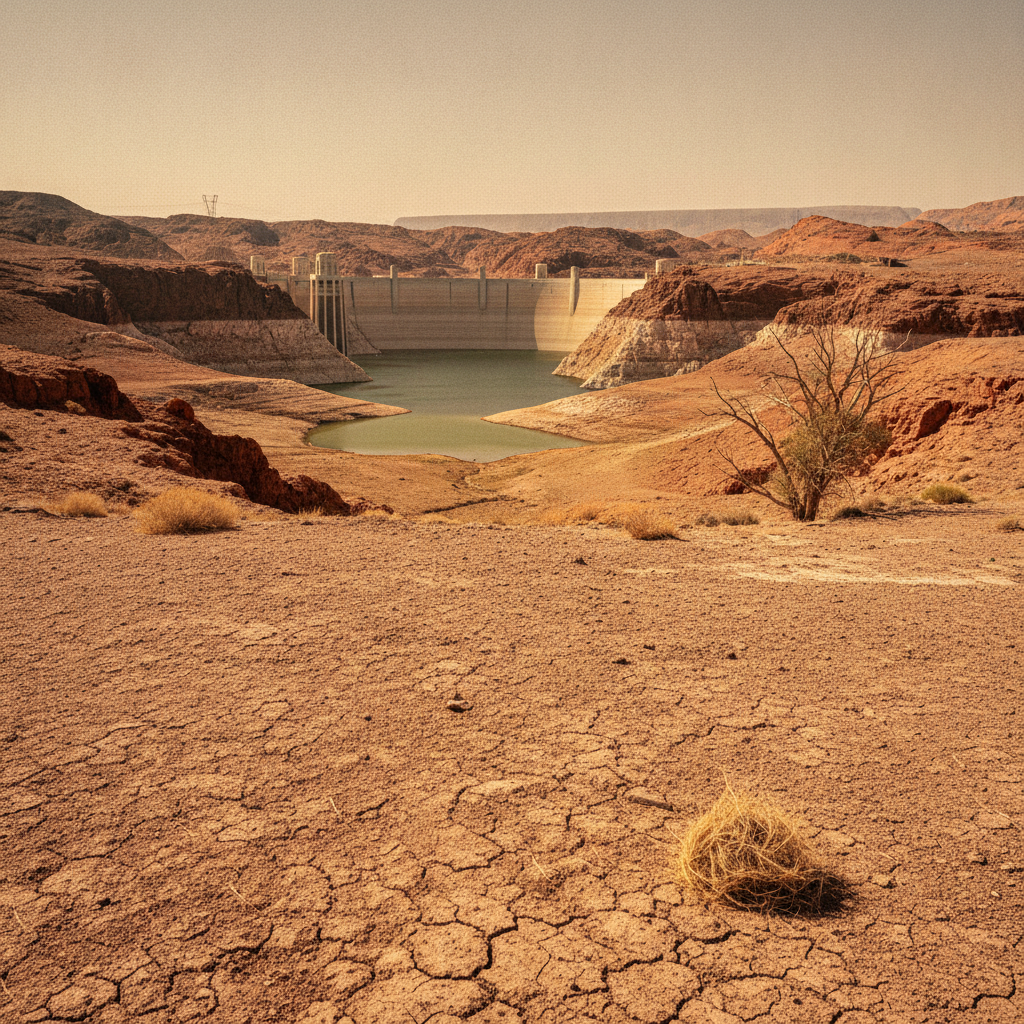
The Bureau of Reclamation has approved a plan that requires California, Nevada and Arizona to reduce their combined annual withdrawals from the Colorado River by 1.25 million acre-feet over the next two years. The reductions seek to prevent further decline in a system that supplies water to roughly 40 million people in the western United States.
Cave Creek, Arizona, a town of about 5,000 that draws nearly all its water from the river, has already imposed cuts this year and expects additional losses. Mayor Robert Morris said the community has capped growth, reopened old wells and negotiated supply deals, yet he compared the outlook to an approaching meteor strike whose damage cannot be predicted.
The uncertainty affects users across seven states, tribal nations and Mexico. Nevada filed suit against the Interior Department and the Bureau of Reclamation this week, claiming that planned cuts reaching 70 percent could leave basic needs in the Las Vegas area unmet.
Major reservoirs that track the river’s health have reached record lows. Lake Mead and Lake Powell hit historic minimums this month, and eight other Bureau of Reclamation reservoirs recorded their lowest levels in at least 30 years, according to ABC7 Los Angeles.
Tom Buschatzke, director of the Arizona Department of Water Resources, said the uncertainty will continue to build in the wrong direction. David Mocko, a senior research scientist, noted that drought develops and recedes slowly and that an expected El Niño will not erase decades of accumulated shortfall.
Farmers in Yuma, Arizona, hold high-priority rights and may avoid cuts for two years, but John Boelts, president of the Arizona Farm Bureau, said the temporary reprieve prevents long-term planting decisions. He observed that orchard crops require years to reach production and that the lettuce consumed today was planned more than six months earlier.
Ray Martinez, who grows alfalfa on the Colorado River Indian Tribes reservation, said the tribe’s senior water rights have not translated into reliable delivery because of aging infrastructure. He has left fields unplanted in prior years to support reservoir levels and now worries about completing the current season, adding that Mother Nature operates beyond human control.
This report is based on coverage by ABC7 Los Angeles: https://abc7.com/post/colorado-river-plan-cut-water-amid-drought-brings-uncertainty-cities-farmers/19758313/